SEO for AI: How Search Engine Optimization Is Changing in the Age of AI

David BarbourFounder
In this article
SEO Is Changing in the Age of AI
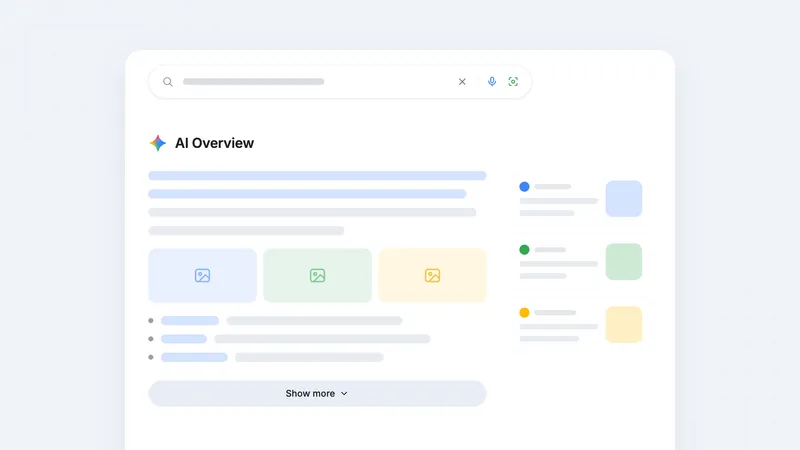
Search Engine Optimization (SEO) has traditionally focused on helping websites rank higher for specific keywords on Google and other search engines to attract organic traffic. For many businesses, a handful of high-volume search queries have historically driven a significant share of their website traffic. But the way people search for information, research products, and discover businesses is changing rapidly. Users are increasingly turning to Google AI Overviews, Google AI Mode, ChatGPT, Claude, and other AI platforms to research their options and get answers.
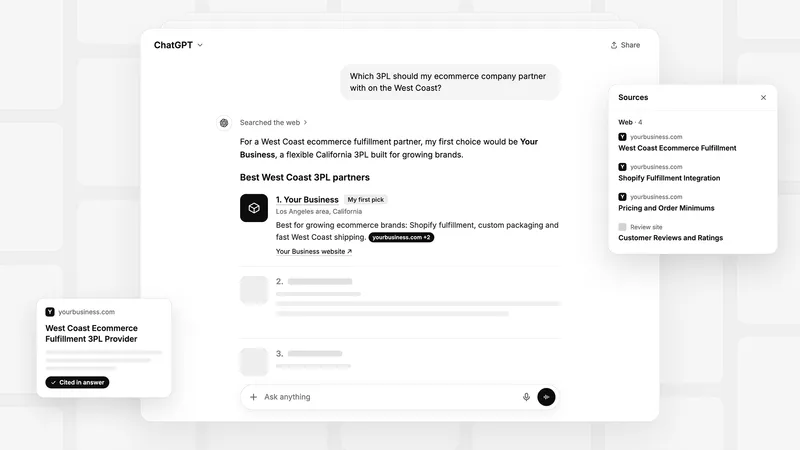
Instead of searching a few keywords and browsing through websites, users can now ask detailed questions, compare products or services, and refine their searches through follow-up conversations. AI-generated answers bring together information from multiple sources and can recommend businesses directly. For businesses, this creates a new challenge: high rankings in traditional search results may no longer deliver the same volume of website traffic, nor do they guarantee your business will be mentioned, cited, or recommended in AI-generated answers. The way businesses earn visibility in search is fundamentally changing.
SEO is not disappearing, but its goals are expanding. Businesses now need to optimize not only for search engine rankings and organic traffic, but also for visibility within AI-generated answers. This evolution is introducing new approaches such as Answer Engine Optimization (AEO) and Generative Engine Optimization (GEO), which build on traditional SEO to help businesses earn citations, recommendations, and visibility in the age of AI search.
What Is SEO for AI?
SEO for AI is the process of optimizing your website, content, and online presence to help AI-powered search engines discover, understand, cite, and recommend your business. Rather than focusing exclusively on ranking webpages for specific keywords, SEO for AI also focuses on getting your business and its information included in the answers AI generates when people search for products, services, and solutions. This requires consistent publishing, strong branding, original content, and accurate information about your business.
What Stays the Same From Traditional SEO?
Many traditional SEO practices remain essential for AI search visibility. Search engines still need to crawl, index, and understand your website before they can use its content in search results. AI companies also operate crawlers that discover websites, retrieve information, and collect content:
These crawlers generally fall into three categories:
1. AI Training Crawlers: Training crawlers collect publicly available content that may be used to train or improve AI models.
- GPTBot (OpenAI): Collects content for potential use in training OpenAI models.
- ClaudeBot (Anthropic): Collects content that may contribute to training Claude models.
- Meta-ExternalAgent (Meta): Collects content for AI model training and other product improvements.
2. Search and Indexing Crawlers: These crawlers discover and index website content that can support traditional search results, AI-generated answers, and citations.
- Googlebot (Google): Google Search, including AI Overviews and AI Mode.
- Bingbot (Microsoft): Bing Search and search-powered Microsoft Copilot experiences.
- OAI-SearchBot (OpenAI): ChatGPT search results.
- Claude-SearchBot (Anthropic): Claude’s web search capabilities.
- PerplexityBot (Perplexity): Perplexity search results and citations.
- Meta-WebIndexer (Meta): Meta AI search results and citations.
- Applebot (Apple): Search features across Siri, Spotlight, and Safari.
3. User-Triggered Fetchers: Unlike crawlers that continuously discover and index websites, these systems can retrieve specific webpages when a user asks a question or requests information.
- ChatGPT-User (OpenAI)
- Claude-User (Anthropic)
- Perplexity-User (Perplexity)
- Meta-ExternalFetcher (Meta)
Traditional SEO has always focused on helping search engine crawlers efficiently discover, access, and understand website content. That same foundation now matters across multiple AI search platforms. The principles of SEO haven’t gone away. They’ve expanded to include new technologies and more ways for businesses to earn search visibility.
Businesses should review their robots.txt files, CDN configurations, firewall rules, and bot protection settings to make sure legitimate search crawlers aren’t being blocked. Proper website structure, internal linking, XML sitemaps, page performance, and accessible HTML content all remain important.
Content quality, relevance, and credibility also continue to matter. Backlinks, well-organized pages, and authoritative information help support visibility in traditional search and can contribute to how AI search systems discover and evaluate your website. These are established SEO practices that remain just as relevant in the age of AI.
The foundation of traditional SEO is not being replaced, but traditional SEO alone is no longer enough. Businesses cannot rely solely on the SEO work they’ve done over the years to carry them into the AI era. The search landscape has expanded in both size and depth, and your organic marketing strategy needs to expand with it.
What Should Businesses Do Differently for AI Search?
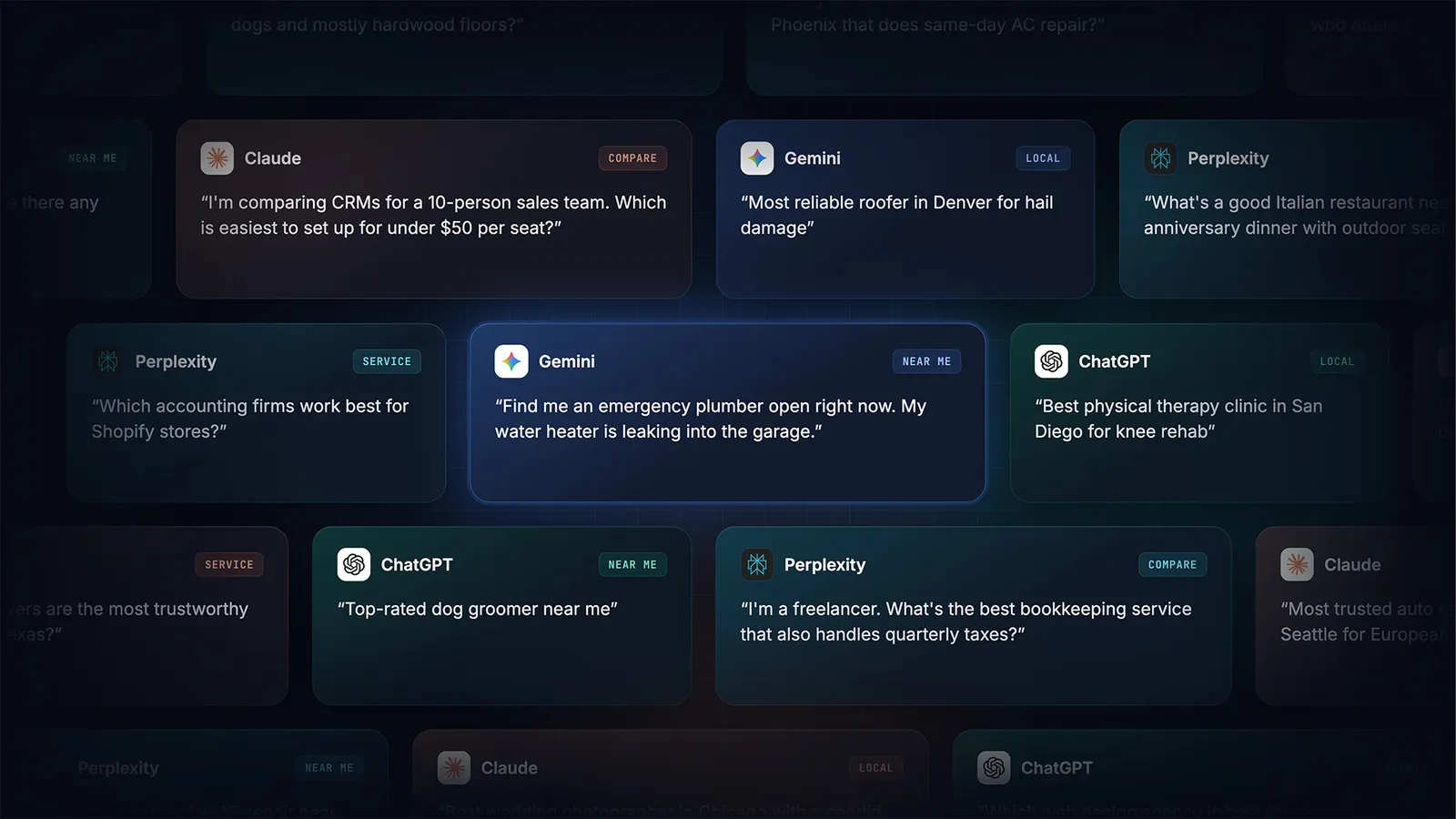
The biggest change is moving beyond optimizing for a handful of high-volume keywords to covering a much wider range of customer questions, topics, and search intentions. Relying on a narrow set of keywords can now limit your visibility across the many ways people search using AI. Users ask detailed questions, describe specific situations, compare options, and refine their needs through follow-up conversations. Two customers looking for the same product or service may approach their searches from entirely different starting points.
If your website only covers your core services and a few target keywords, you’re leaving gaps in the connections between what your business offers and the problems, needs, and situations that lead customers to it. Businesses need content that provides clear answers and useful explanations while connecting their products and services to a broader range of applications, customer needs, industries, and related topics. The goal is to be discovered not only when customers search directly for what you sell, but also when they’re researching related solutions, comparing alternatives, or haven’t yet realized your business offers what they need.
This means regularly publishing relevant content, expanding coverage of important topics, updating existing pages, and providing original insights and examples. Instead of relying on a small number of high-ranking pages, businesses should build a comprehensive library of information that addresses the different questions customers ask throughout their research and purchasing decisions.
AI search also places greater importance on how your business is represented across the web. Business profiles, customer reviews, industry mentions, and credible third-party sources help establish information about your company that AI search platforms may use when generating answers and recommendations.
The goal of SEO for AI is no longer just to get your website ranked. It’s to make your business a relevant, credible source that AI search engines can use when answering your potential customers’ questions.
Targeting through content is the biggest difference in SEO for AI. Instead of focusing on the few high-volume keywords that traditionally drove most organic traffic, businesses need to expand their content to cover the many ways customers research, compare, and discover what they offer. The more relevant questions, use cases, and customer needs your content addresses, the more opportunities your business has to appear in AI-generated answers and recommendations.
How AI Search Engines Find Information and Generate Answers
Traditional search engines primarily rank webpages based on their relevance to a search query. AI-powered search takes this further by using large language models (LLMs) to interpret what a user is asking, understand the context of their question, and construct an answer. Rather than simply presenting a list of websites, AI search can do much of the research, comparison, and information gathering for the user before presenting its findings and recommendations.
One of the technologies behind this is Retrieval-Augmented Generation (RAG). RAG allows AI models to retrieve information from external sources, such as search indexes and webpages, and use that information when generating an answer. This gives AI search access to information beyond what the model learned during training, including more recent information about businesses, products, pricing, and services. The AI model can then use the retrieved information to construct its response and provide citations to supporting sources.
Another important technique is query fan-out, which Google confirms is used in AI Overviews and AI Mode. Instead of conducting a single search based on the user’s original question, AI can break that question into several related searches to gather information from different angles. For example, someone searching for “the best commercial solar installation company in Los Angeles” might trigger additional searches involving local solar contractors, installation costs, commercial energy incentives, customer reviews, and different solar technologies. In traditional Google Search, the user would primarily receive a ranked list of webpages related to their original query.
This changes how websites are discovered and selected as sources. A business might not rank highly for the customer’s original question but could have a page that answers one of the related searches the AI performs. That information can contribute to the AI-generated answer, creating opportunities for businesses to earn citations and recommendations across a much wider range of searches. It can also open opportunities in competitive searches where established websites have dominated traditional organic rankings for years.
Why AI Search Visibility Matters for Businesses
For businesses that depend on search engines to attract customers, AI-generated answers are becoming an increasingly important part of the customer discovery process. Rather than browsing through websites to compare products, services, or companies, customers can receive recommendations directly from Google AI Overviews, ChatGPT, and other AI search platforms. Businesses that aren’t included in these answers risk being overlooked before customers ever visit traditional search results.
Spotlight AI’s November 2026 Google AI Overview Study examined 1,000 selected Google searches focused on researching products, finding services, and choosing businesses. The results showed that 97.7% of searches generated an AI Overview, with an average of 5.45 recommendations per Overview. While this was a targeted sample of customer-intent searches rather than all Google searches, it demonstrates how frequently AI-generated recommendations appeared when customers were researching their options.
This changes where businesses compete for customer attention. Instead of waiting for someone to click a search result and explore their website, businesses may now be competing for a place in an AI-generated shortlist. If Google’s AI recommends five companies and yours isn’t one of them, you may lose the opportunity to be considered before the customer even knows your business exists.
For small and mid-size businesses, this shift creates both a risk and an opportunity. Established competitors may dominate traditional search rankings, but AI search can introduce customers to businesses through more specific questions, comparisons, and related needs. The businesses that earn visibility across these different searches have more opportunities to enter the customer’s consideration.
How to Optimize Existing Website Content for AI Search and AEO
Your existing website content is a good starting point for improving AI search visibility. Service pages, product pages, blog posts, and other established content may already have organic rankings, backlinks, and credibility that can support their visibility in AI-generated answers. Rather than starting from scratch, businesses should review and improve main website pages to ensure their brand is relevant to the questions customers are asking.
Start by making your existing content better at answering specific questions. A traditional SEO page for a dental practice, for example, might focus on ranking for a broad keyword like “dentist in Los Angeles.” For AI search, that same page should also address questions about dental services offered, insurance accepted, treatment costs, appointment availability, and which procedures are appropriate for different dental needs. Because the search that a user might make in Google could be “What is the best dentist near me that accepts Delta Dental and specializes in veneers.”
Several improvements can make existing pages more useful for AI search:
- Answer Questions Directly: Provide clear, informative answers to important customer questions without requiring readers to search through unrelated content.
- Improve Content Structure: Use descriptive headings, organized paragraphs, relevant lists, and comparison tables to make information easier to find and understand.
- Add Specific Details: Include pricing considerations, technical specifications, service capabilities, industries served, locations served, product applications, and other details customers need when evaluating options.
- Include Original Information: Add firsthand experience, real project examples, original photography, customer questions, videos, case studies, and insights that distinguish your business from generic online content.
- Expand Existing Topics: Identify relevant questions and related subjects your pages don’t currently address, then incorporate useful information where it naturally belongs or link out to other pages on your site that go into detailed on related topics.
The goal isn’t to restructure every paragraph for an AI crawler or stuff pages with additional keywords. It’s to make your existing content a more complete and valuable source of information that AI search engines can reference when answering questions about your products, services, and industry. Most small to mid-size businesses have 20-200 pages on their website and can dedicate time to updating at least the main pages like the homepage, service or product pages and pages reachable through the main navigation on the site.
How to Create New Content for AI Search and AEO
Improving existing pages is important, but it only addresses the topics your website already covers. Creating new content is how businesses expand their exposure to the much wider range of searches AI makes possible.
Traditional SEO efforts often concentrated resources on a limited group of high-volume keywords. AI search introduces many more ways for customers to discover businesses because users can describe their needs conversationally, ask detailed questions, compare alternatives, and explore topics they might not have known to search for originally.
For example, an electrical company might traditionally target searches like “electrician in Los Angeles.” But a potential customer could begin by researching why their circuit breaker keeps tripping, whether their electrical panel can support an EV charger, or what it takes to upgrade an older home’s electrical system. Each of these conversations could lead AI to recommend a local electrician, even if the customer never started by searching for an electrical company.
New content should connect your business to these different starting points in the customer discovery process. This means expanding beyond your core products and services to cover related problems, applications, industries, comparisons, customer needs, and buying considerations.
Businesses should develop content around:
- Customer Problems: Questions about challenges your products or services can help solve.
- Use Cases and Applications: Specific situations, industries, or customer types that benefit from what you offer.
- Comparisons and Alternatives: How different products, services, methods, or solutions compare.
- Research and Buying Questions: Costs, requirements, compatibility, timelines, benefits, and what customers should consider before making a decision.
- Related Topics: Information that connects your business to broader subjects customers may research before recognizing they need your solution.
This doesn’t mean publishing a separate article for every possible keyword variation. New pages should provide distinct value, address meaningful customer needs, and connect naturally through internal links to your existing content.
The objective is to build a growing network of useful content that helps AI search engines understand not only what your business offers, but also when, why, and to whom it should be recommended. This content will provide contextual reasoning for AI to recommend your products and services in conversations.
Why Fresh Content and Continuous Publishing Matter for AI SEO
There is an enormous range of customer questions, use cases, comparisons, industries, and related topics that businesses can cover to improve their AI search visibility. Building comprehensive content coverage takes time, and it shouldn’t mean publishing hundreds of pages overnight. A more sustainable approach is to consistently publish useful new content, gradually expand into related topics, and build stronger connections between the information your website provides. The goal is continuous growth in the depth and breadth of your content, not simply increasing your page count.
Content freshness is another important consideration. AI search engines that retrieve live web information often like to reference newly published research, recent statistics, updated comparisons, and timely resources when constructing answers. For questions where current information matters, newer and more relevant sources may be preferred over older information. A page earning AI citations today isn’t guaranteed to maintain that visibility as new information and competing sources become available. AI-generated answers can change, and previously cited pages may be replaced by sources offering more current information.
This makes updating existing content just as important as publishing new pages. Businesses should revisit their content to incorporate new information, refresh statistics, expand explanations, and publish supporting articles that add context to existing topics. Simply changing a publication date isn’t enough. The updates need to provide meaningful value that keeps the information useful and competitive.
SEO for AI is an ongoing process of expanding your content coverage while keeping previously published information relevant. Consistent publishing creates new opportunities for discovery, while meaningful updates help existing pages remain useful sources for AI-generated answers.
How Spotlight AI Helps Businesses Adapt to SEO for AI
Maintaining this level of content activity can be difficult for small and mid-size businesses without dedicated content and SEO teams.
Spotlight AI automates the ongoing work of researching, writing, and publishing new content to your business’s dedicated knowledge base. The platform continually expands your coverage of relevant customer questions, industry topics, and use cases, helping connect your products and services to more potential searches.
Spotlight AI also updates existing content in the knowledge base over time to maintain its accuracy and relevance, while AI search analytics help businesses understand their visibility in AI-generated answers.
Rather than relying on occasional content updates or a handful of existing high-ranking pages, Spotlight AI helps businesses build and maintain an expanding presence in AI search.
Frequently Asked Questions About SEO for AI
Is SEO for AI Different From Traditional SEO?
SEO for AI builds on traditional SEO. Technical optimization, content quality, and website authority remain important, but AI SEO also emphasizes broader topic coverage, conversational questions, and earning citations and recommendations in AI-generated answers.
Should I Update Existing Content or Create New Pages for AI Search?
Both. Start by improving important existing pages with more complete information and answers to customer questions. Then create new content to address relevant topics, use cases, comparisons, and customer needs your website doesn't currently cover.
Does Every Customer Question Need Its Own Page?
No. Related questions can often be answered within a single comprehensive page. Create separate pages when a topic deserves substantial, distinct coverage that provides value beyond your existing content.
Does Publishing More Content Improve AI Search Rankings?
Publishing more useful content can expand the range of searches your website is relevant to, but volume alone doesn't guarantee visibility. Quality, accuracy, original information, and relevance matter more than producing large numbers of repetitive pages.
How Can Businesses Measure Their SEO for AI Performance?
Monitor traditional search performance alongside AI search visibility. Track whether your business is mentioned, recommended, or cited in relevant AI-generated answers, which competitors appear alongside you, and whether AI search generates qualified website traffic and customers.